Austin, Texas
Hayden's TimbreAustin, Texas is the decisive urban environment of the story: a place that fails to deliver the prosperous future Timbre Simons expects, yet gradually provides the networks through which she survives and rebuilds her life. Its apartments, workplaces, shelters, restaurants, music venues, stadiums, and family homes form a social map of class insecurity and chosen belonging, while the city’s geography repeatedly determines who can meet, work, eat, or remain safe.
Arrival and Economic Disappointment
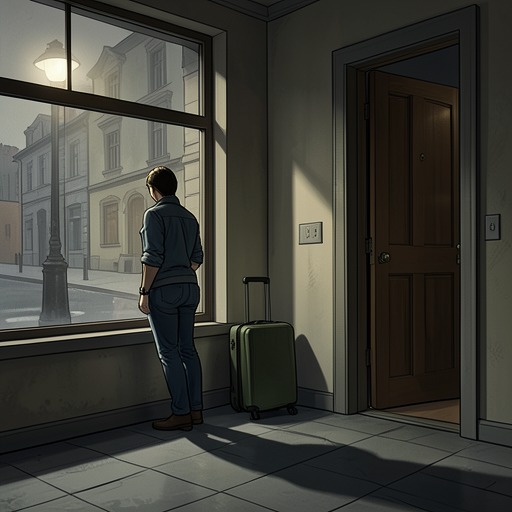
Timbre Simons comes to Austin, Texas after graduating from a small university in West Texas, believing that a good job will be waiting in the larger city. Instead, she encounters an oversupplied labor market filled with college graduates who remain in the area after finishing at the University of Texas. Her degree does not protect her from unemployment or poor working conditions; the city’s promise of advancement is immediately complicated by competition among other educated people in their twenties.
Housing becomes part of the same disappointment. To afford rent while remaining in a safe section of Austin, Texas, Timbre Simons needs a roommate. The garage apartment behind her landlord begins as a temporary arrangement intended to last six months but extends to two years, showing how an emergency solution hardens into an enduring condition. The city is therefore not simply a backdrop to her hardship: its rents, employment market, and uneven access to safety shape the limits of her choices.
Domestic Survival and Friendship
The Austin, Texas apartment becomes bearable through Caylor’s presence. Caylor arrives when Timbre Simons most needs practical support and repeatedly rescues her from problems, becoming the roommate she regards as exceptionally dependable. Their friendship is strengthened by the fact that Caylor does not pursue her romantically, allowing the apartment to function as a rare space of trust rather than another setting in which she must defend her boundaries.
Their domestic arrangement also gives Timbre Simons a candid view of the social world around her. Caylor cooks, dislikes disorder, and brings home attractive friends who likewise do not hit on her, although their sexual activity sometimes becomes loud enough to disturb her sleep. These details make the apartment both refuge and comic observation post: Timbre Simons can notice the freedoms of other Austin residents while lacking comparable financial freedom herself. The contrast between their bodies, leisure, and sexual privacy and her own precarious circumstances underscores the city’s uneven distribution of comfort.
Work, Food, and the City’s Social Geography
After changing jobs and losing her roommate, Timbre Simons discovers which friendships survive economic decline. People who once called themselves friends stop visiting when they see where she lives, leaving Jenna as one of the relationships she can trust. Her income is directed almost entirely toward securing independent housing, while work shoes become a necessary priority because her feet hurt during shifts. The shelter supplies some food, and Ford commonly pays for a meal during each shift, making ordinary eating dependent on the generosity built into her working environment.
The location of The Bar on South Congress gives the city a practical geography of possibility. Restaurants are close enough for a meal after work, but Timbre Simons and Jenna deliberately travel downtown to Stubbs for dinner and live music. At Stubbs, Halo’s Car performs country music that they value as authentic rather than the commercially dominant form of “Bro Country.” The outing matters because it briefly reverses the logic of scarcity: Timbre Simons is not merely waiting for food, housing, or a better job, but choosing a place for pleasure and music with a friend.
Family, Music, and Romantic Complication
Austin, Texas also contains the family circle that surrounds Hayden Devillier. At Crew Devillier’s football practice, Timbre Simons’s account places Peri Powell and Ryan Powell in the stadium stands, while Gemma plays with ponies and Teagan spends time laughing with friends. The Powell family’s ease and togetherness make Timbre Simons feel the force of the family she lacks, but the same setting also shows that Crew Devillier is not isolated: the Powell family provides him with a stable extended network even though Hayden Devillier raises him as a single father.
For Hayden Devillier, Austin’s schedules and distances make romance structurally difficult. Timbre Simons earns the most money at The Bar on Friday and Saturday nights, when Hayden Devillier cannot easily see her because of his responsibilities to Crew Devillier. Weeknight dates are also obstructed by Hayden Devillier’s combined work and parenting schedule. The city’s social life may offer restaurants, concerts, sports, and family gatherings, but access to those spaces depends on shifts, transportation, childcare, and money. Austin, Texas thus turns attraction into a logistical problem before either character can treat it as a simple emotional one.
Narrative Significance
The city’s significance lies in its double function as an engine of exclusion and a network of possible belonging. Timbre Simons arrives expecting professional mobility and instead finds crowded employment, unstable housing, and friendships that collapse under class pressure. Yet the same Austin, Texas that exposes those vulnerabilities also contains Caylor’s domestic loyalty, Jenna’s companionship, Ford’s practical generosity, Stubbs’s music, the shelter, The Bar, and the Powell family’s hospitality.
Because the story moves between these locations, Austin, Texas is presented less as a single scenic place than as a set of overlapping social worlds. The garage apartment, shelter, bar, downtown music venue, and football stadium each reveal a different condition of life: provisional independence, homelessness, wage labor, cultural pleasure, family continuity, and romantic possibility. The city’s decisive narrative movement is therefore not Timbre Simons’s simple escape from hardship, but her gradual discovery that survival in Austin, Texas depends on recognizing trustworthy people and allowing separate communities to become a form of home.